

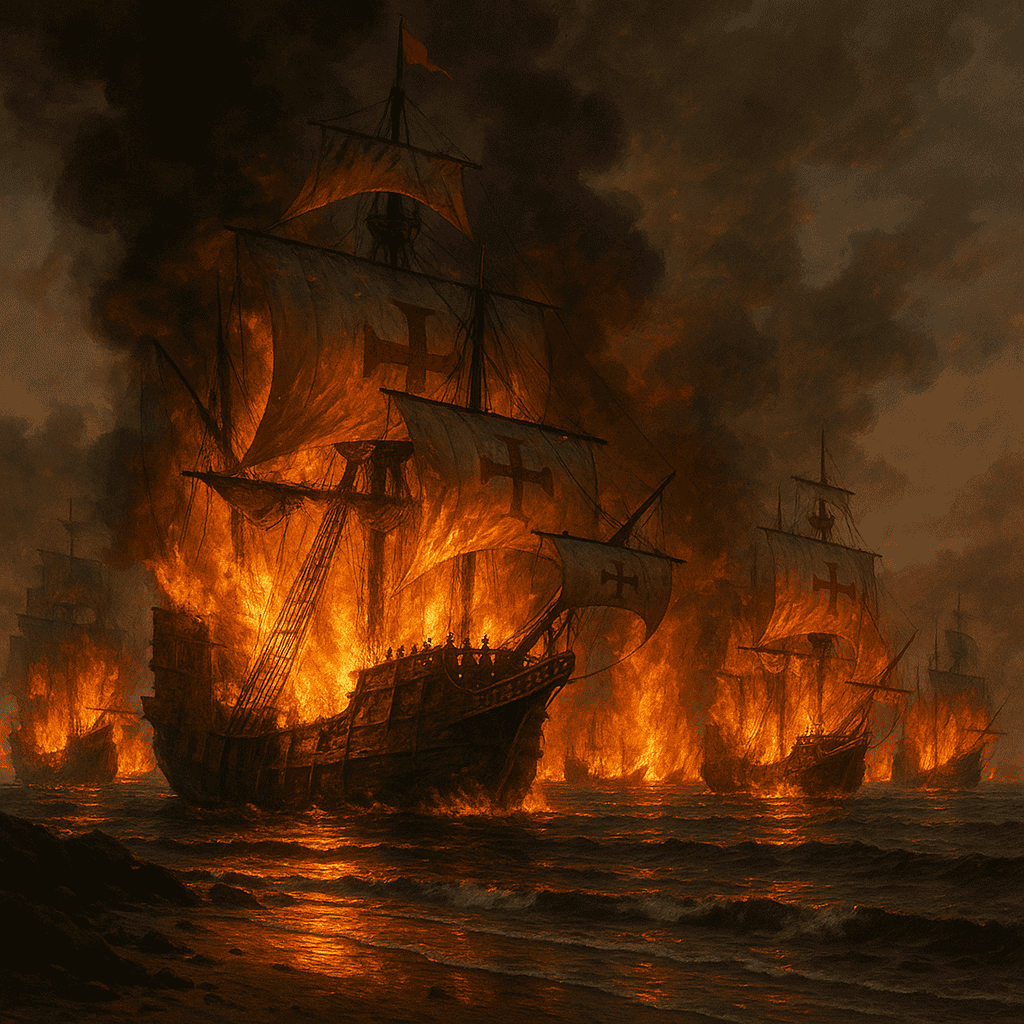
The salty air hung thick over the Veracruz coast in 1519 as Hernán Cortés surveyed his exhausted landing party. Behind him stood 600 men facing an empire of millions. Ahead lay the golden city of Tenochtitlán, defended by the fierce Aztec warriors who had repelled invaders for six centuries. As his soldiers murmured about the impossible odds, Cortés made a decision that would echo through history—he ordered every ship burned.
The crackling flames consuming the vessels created more than smoke; they forged a psychological revolution. With retreat eliminated, Cortés’ men faced a binary choice: conquer or perish. This act of radical commitment transformed apprehension into desperate resolve. Against astronomical odds, they prevailed. Centuries later, this “burn the boats” mentality remains the ultimate metaphor for total commitment in pursuing ambitious goals.
The Psychology of No Retreat
Cortés understood a profound truth: escape routes undermine potential. Historical accounts reveal his men were exhausted after their journey and terrified of the Aztecs. Previous expeditions had failed even to establish settlements, making retreat to Cuba seem logical. Yet by sinking their fleet (under the pretext of unseaworthiness), Cortés weaponized their desperation:
“Pressure can create diamonds and sometimes we need to bring our own pressure”.
Modern neuroscience confirms this ancient wisdom. When our brain detects alternatives, effort naturally diminishes. Princeton researchers found subjects exerted 48% less effort when allowed task-switching options. Cortés instinctively knew what science now proves: eliminating Plan B activates dormant reserves of creativity and perseverance.
The Modern Armada: Boats We Must Burn Today
The ships we cling to manifest as safety nets that stifle growth. Here’s how to identify and torch them across life domains:
- Career Transformation:
“Burning the ships might mean leaving a comfortable job to pursue your passion”.
Just as Elisha burned his plowing equipment to become a prophet (1 Kings 19:21), professionals must sacrifice the “old identity.” This could mean resigning before securing a new role, investing savings into certification, or publicly declaring career shifts—eliminating the option to retreat to dissatisfaction. - Entrepreneurial Conquests:
Apple’s near-bankruptcy in 1997 demanded radical action. Steve Jobs “burned ships” by slashing 70% of products—including profitable ones—to focus solely on the iMac, iPod, and iPhone. This scorched-earth simplification forced innovation with no fallback position, mirroring Cortés’ tactical focus. - Academic Ascension:
A political candidate quoted Cortés when committing to run a positive campaign despite opponents’ attacks: “While losing was not an option, we stayed on message”. Students similarly burn ships by declaring their target university publicly, investing non-refundable deposits, or enrolling in rigorous programs with no transfer options—making academic success the only viable path. - Personal Metamorphosis:
After significant weight loss, Mark Perna donated his entire wardrobe: “I can never allow myself to go back to my old size”. Like Elisha barbecuing his oxen to symbolize farming’s end, destroying physical reminders of old habits (cigarettes, junk food, credit cards) makes regression practically impossible.
The Firestarter’s Framework: Implementing Total Commitment
Burning ships requires strategic incineration, not reckless arson:
- Clarify Your “Treasure”:
Cortés framed his conquest as a transformative mission larger than any individual. Define your purpose with equal vividness: Is it freedom? Legacy? Impact? “Figure out what problems you want to solve, who you want to help, and why”. - Identify Your Fleet:
List every escape route: savings you could lean on instead of launching your business; part-time jobs distracting from studies; “just one cigarette” stashes. These are your ships. - Torch with Ceremony:
When Elisha burned his plow, he hosted a feast—transforming sacrifice into celebration. Similarly, host a “bon voyage party” when quitting your job, or publicly deactivate old social media accounts when starting a digital detox. Ritualize commitment. - Prepare for Battle:
Cortés didn’t just burn ships; he forged alliances with Tlaxcalan warriors before marching forward. Build your support network before eliminating retreat options.
When the Smoke Clears: Resilience Forged in Flames
The aftermath of Cortés’ decision reveals commitment’s ultimate reward: resilience becomes involuntary. With no ships, his men innovated tactics, formed unlikely alliances, and fought with desperate creativity. Modern psychology identifies this as “competitive single-mindedness”—the neurological state where options reduction heightens focus and problem-solving.
Consider the entrepreneur who mortgages their home to fund a startup. Every rejection letter or product flaw becomes a puzzle to solve, not a reason to quit. Like Cortés’ soldiers discovering Mexico’s wealth only after burning their escape, we often find our deepest capabilities only when retreat vanishes.
Your Veracruz Moment
The ships still floating in your harbor aren’t made of wood, but of hesitation:
- That savings account you could live on while delaying your business launch
- The “optional” training modules you skip
- The untouched resignation letter in your drafts folder
Cortés’ legacy teaches us that historic victories require historic commitments. As you stand on the shore of your next ambition, remember: true safety lies not in escape routes, but in the relentless pursuit of forward motion. Burn your ships. Your empire awaits.
What ship will you burn this week?